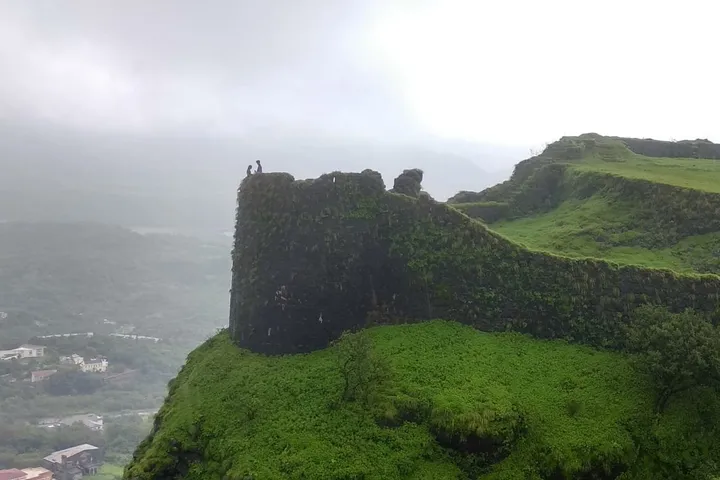
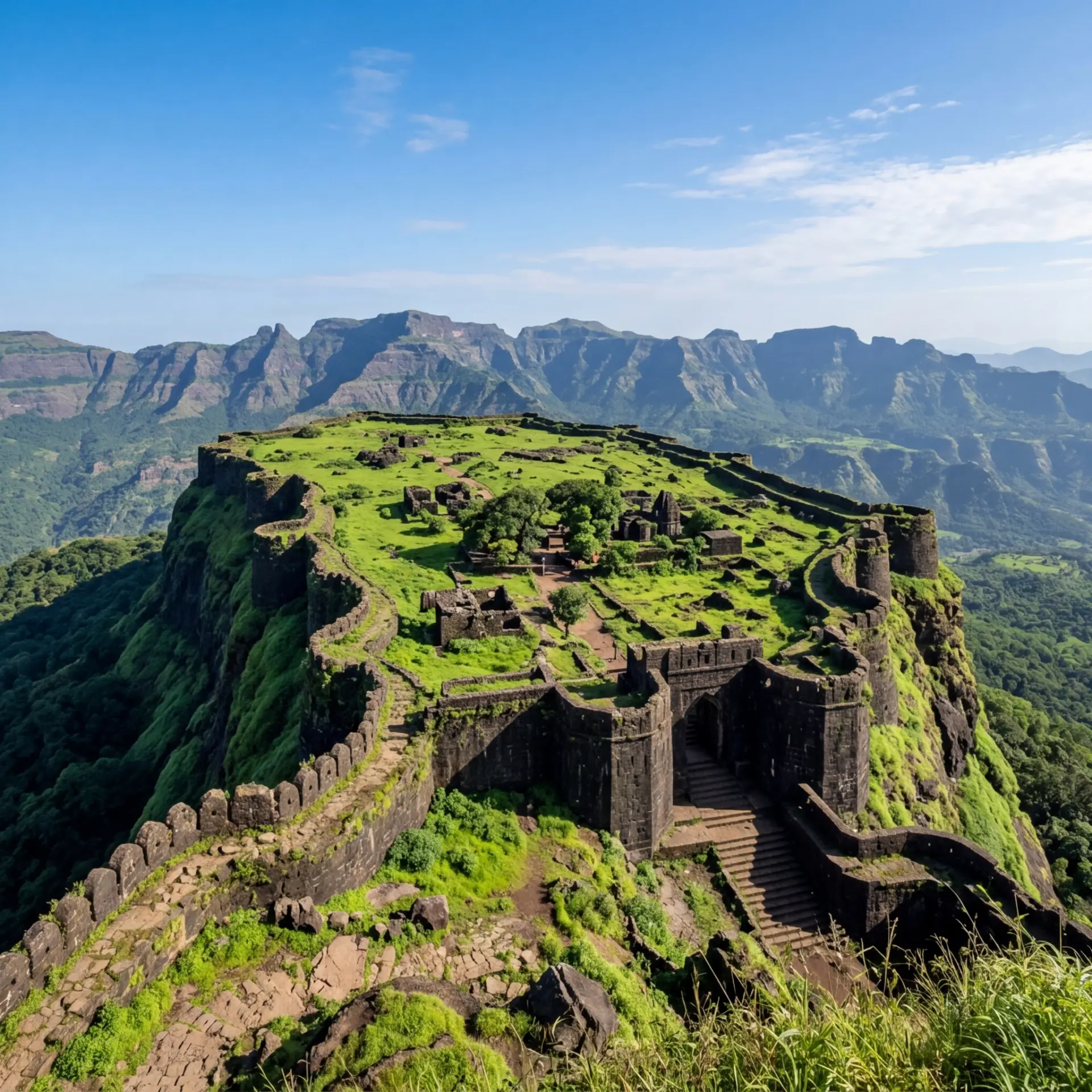
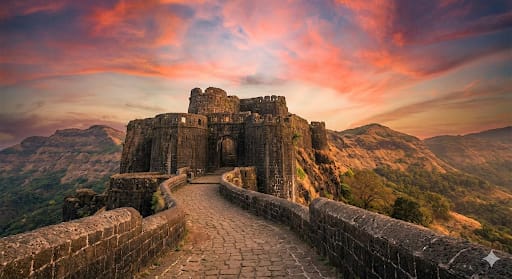
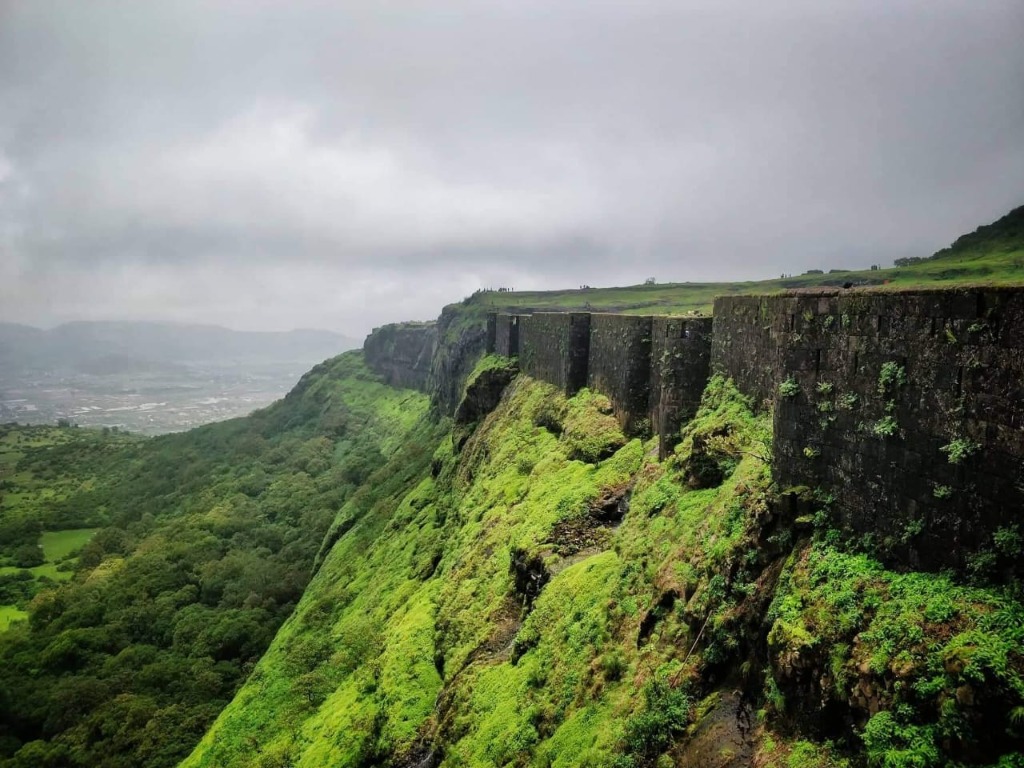
Korigad Fort is a well-preserved hill fort located near Lonavala, known for its massive, intact fortifications that allow visitors to walk along its entire perimeter. Dating back before 1500 AD, it was incorporated into Chhatrapati Shivaji Maharaj's kingdom and later became a site of fierce resistance against the British. The fort features several ancient temples, perennial ponds, and impressive cannons, including the famous Laxmi Toph. Its easy accessibility and scenic beauty make it a popular destination for trekkers and families.
HILL FORT · WALKABLE WALLS · LAXMI TOPH
KORIGAD FORT
KORIGAD FORT — THE GUARDIAN OF LONAVALA
Korigad Fort, an ancient hill fortress near Lonavala, stands as a testament to Maratha resilience with its remarkably intact 2 km long perimeter walls. Offering an easy trek suitable for families, the fort boasts historical temples, serene perennial ponds, and formidable cannons including the famous Laxmi Toph. Its strategic location provides breathtaking views of the surrounding Sahyadris and Aamby Valley, making it a popular destination for history buffs and nature lovers alike.
कोरीगड किल्ला — अभेद्य भिंतींचा दुर्ग
मार्ग निवडा · Choose Your Path
Chronicles of the Fort
Wander through history, ramparts, kitchens, and trails — pick a chapter below.
Tap a chapter to switchTap to switch
A Fort of Resilience and Strategic Importance
The exact date of Korigad Fort's construction remains unknown, but historical evidence suggests its existence well before 1500 AD. Its strategic position, overlooking the plains and trade routes, made it a valuable asset for various rulers. In 1657 CE, the fort was incorporated into the burgeoning Swarajya (self-rule) of Chhatrapati Shivaji Maharaj, who recognized its importance alongside other key forts like Lohagad and Visapur.
Korigad's formidable defenses were put to the test during the Anglo-Maratha wars. In 1818, the British East India Company launched a determined assault to capture the fort. Despite a prolonged siege and the fort's strong resistance, Korigad eventually fell on March 14, 1818. The British managed to breach its defenses by a stroke of luck: a cannonball fired by their forces ignited the fort's stored ammunition, leading to its surrender. This event marked the end of Maratha control over Korigad and symbolized the broader decline of the Maratha Empire.
Today, Korigad stands as a testament to the engineering prowess of its builders and the resilience of those who defended it. Its well-preserved walls and structures offer a tangible link to a bygone era, inviting visitors to step back in time and explore its rich historical tapestry.
The Unyielding Fort
Korigad was one of the last forts to fall to the British in 1818, showcasing its formidable defenses and the determination of its Maratha defenders.
- 1657 CEShivaji Maharaj's Acquisition
Fort becomes part of the Maratha Empire.
- 1818 CEFall to the British
Captured by the British after a fierce battle.
"Korigad's walls, though silent now, echo with tales of Maratha valor and the strategic brilliance that once guarded the heart of Maharashtra."Maratha Valor and Strategic Brilliance
Key Landmarks
Must See
Fort Walls
The impressive and intact perimeter walls, perfect for a leisurely walk.
Must See
Laxmi Toph
A large, historic cannon, a symbol of the fort's military past.
Koraidevi Temple
The main temple on the fort, dedicated to the goddess Koraidevi.
Perennial Ponds
Two natural water bodies on the fort top, providing scenic beauty.
Ganesh Darwaja
The main entrance, showcasing traditional fort architecture.
Local Delights near Korigad
Must-Try Dishes
Vada Pav
VEGA popular Maharashtrian snack, readily available.
₹20-40
Bhaji (Pakoras)
VEGCrispy fried fritters, especially enjoyable during monsoon.
₹50-100
Pithla Bhakri
VEGTraditional gram flour curry with flatbread, a hearty meal.
₹80-150
Tea/Coffee
VEGHot beverages available at base village stalls.
₹10-30
Best Restaurants
- Local Stalls (Peth Shahapur)Peth Shahapur · Basic Snacks · ₹50-150/personSpeciality: Vada Pav, Bhaji, Tea
- Restaurants in LonavalaLonavala · Various Cuisines · ₹200-800/personSpeciality: Wide range of options for pre/post trek meals
Nearby Activities & Experiences
Korigad Fort Trek
Peth Shahapur
An easy trek to explore the fort's perimeter, temples, and ponds.
Free (parking extra)
Walk on Fort Walls
Fort Top
Enjoy a unique experience of walking along the entire 2 km circumference of the fort walls.
Free
Photography
Throughout the fort
Capture the fort's architecture, cannons, ponds, and panoramic views.
Free
Visit Koraidevi Temple
Fort Top
Pay respects at the ancient temple of the patron goddess.
Free
Where to Stay
Camping on Fort
Korigad Fort Top · Basic Camping
Allowed, but carry own gear. Three temples offer some shelter.
Homestays (Peth Shahapur)
Peth Shahapur · Basic Accommodation · ₹500-1500/night
Limited options, inquire locally.
Hotels/Resorts in Lonavala
Lonavala · ₹1500-7000+/night
Wide range of options with modern amenities.
Safety Alerts
- The fort walls, though intact, can be exposed to strong winds; exercise caution.Season: all
- During monsoon, the steps can become waterfalls and very slippery; wear appropriate footwear.Season: monsoon
- Carry enough water, especially during summer, as water sources on the fort are not always potable.Season: summer
Police: Nearest police station in Lonavala.
Medical: Primary Health Centers in nearby villages; larger hospitals in Lonavala.
What Visitors Say
"Korigad is a fantastic fort for beginners and families. The walk on the walls is incredible, and the views are stunning. A perfect day trip from Lonavala!"
Top Positives
- ✓Easy trek
- ✓Walkable fort walls
- ✓Impressive cannons
- ✓Beautiful ponds
- ✓Panoramic views
Pro Tips
- →Visit during monsoon to see the steps turn into waterfalls.
- →Go early on weekends to avoid crowds.
- →Combine with a visit to Aamby Valley or other nearby Lonavala attractions.
- →Carry a good camera for scenic shots.
4.5
(Many reviews)
Frequently Asked Questions
What is the history of Korigad Fort?
Korigad Fort stands in Pune district, Maharashtra, and dates to Pre-1500 AD (Fortified by Shivaji). Korigad Fort is a well-preserved hill fort located near Lonavala, known for its massive, intact fortifications that allow visitors to walk along its entire perimeter. Dating back before 1500 AD, it was incorporated into Chhatrapati Shivaji Maharaj's kingdom and later became a site of fierce resistance against the British. The fort features several ancient temples, perennial ponds, and impressive cannons, including the famous Laxmi Toph. Its easy accessibility and scenic beauty make it a popular destination for trekkers and families.
How to reach Korigad Fort?
Korigad Fort: Accessible by road to Peth Shahapur village, followed by an easy 1-hour trek up a well-defined path/stairs. It lies in Pune district, Maharashtra (Near Peth Shahapur Village, Lonavala, Pune District, Maharashtra).
What is the trek distance and difficulty of Korigad Fort?
Korigad Fort is a easy trek of about 2 km, taking roughly 1 hours, rising to 923 m.
What is the best time to visit Korigad Fort?
The best time to visit Korigad Fort is monsoon (Jul-Sep) for lush greenery/waterfalls; Winter (Oct-Feb) for clear views.
What is the entry fee for Korigad Fort?
Entry to Korigad Fort: Free (parking fees apply)..
संग्रह · Collections
This Fort Appears In
जवळचे किल्ले · Explore More
Nearby Forts to Explore
Discover other Maharashtra forts close by — plan a multi-fort trek or weekend heritage trail.
संदर्भ · References
References & Further Reading
Authoritative sources for Korigad Fort — verify history, location and photos on Wikipedia, Google Maps, Wikimedia Commons and official government portals.
- ↗WikipediaKorigad Fort on Wikipedia
- ↗Google MapsKorigad Fort on Google Maps
- ↗Wikimedia CommonsKorigad Fort photos on Wikimedia Commons
- ↗Maharashtra Tourism (Govt.)Maharashtra Tourism — Forts
- ↗ASIArchaeological Survey of India
External links open in a new tab. Durgved is not affiliated with the linked sources.