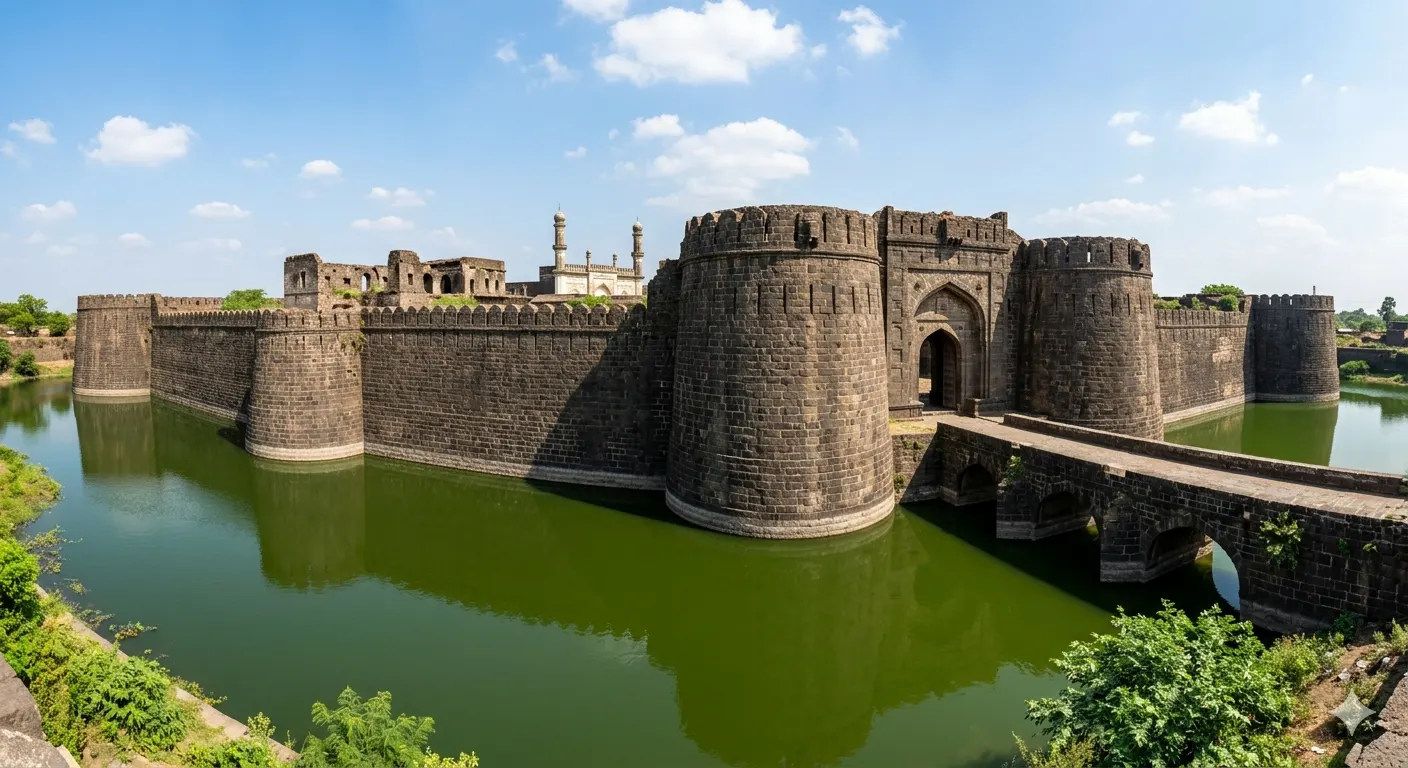
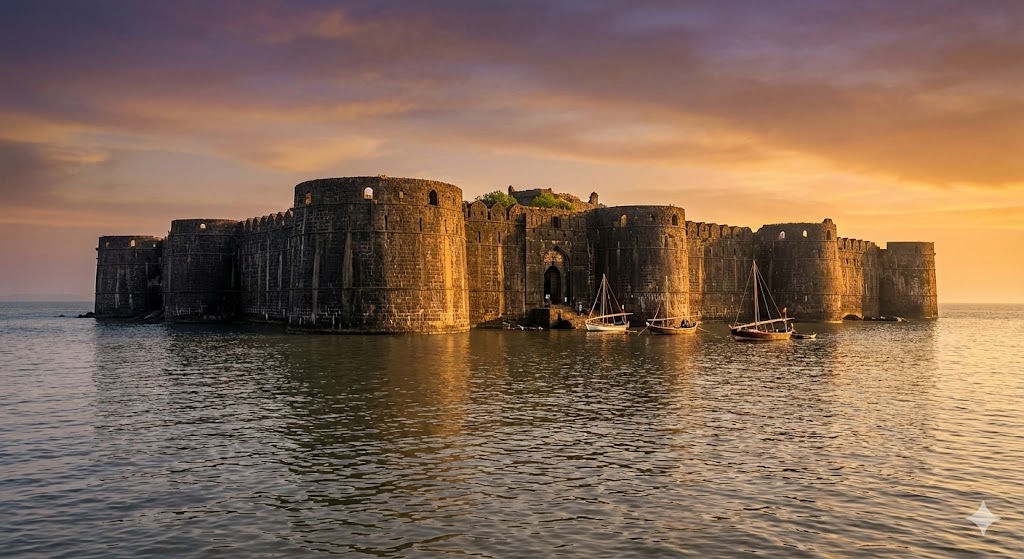
Khanderi Fort, officially known as Kanhoji Angre Island, is a historic sea fort located off the coast of Thal near Alibaug. Built by Chhatrapati Shivaji Maharaj in 1679, it served as a crucial naval base for the Maratha Empire, particularly under the legendary Admiral Kanhoji Angre. The fort is renowned for its strategic importance in controlling the Arabian Sea, its British-era lighthouse, and its rich history of naval battles. It offers a unique island experience, accessible by boat, making it a significant destination for history and sea enthusiasts.
SEA FORT · NAVAL HISTORY · ICONIC LIGHTHOUSE
KHANDERI FORT
KHANDERI FORT — THE MARATHA NAVAL BASTION
Khanderi Fort, officially known as Kanhoji Angre Island, is a formidable sea fort that played a pivotal role in the Maratha Empire's naval defense. Located strategically off the coast of Alibaug, this island fortress, built by Chhatrapati Shivaji Maharaj, became the stronghold of the legendary Admiral Kanhoji Angre. With its historic lighthouse and remnants of a glorious past, Khanderi offers a captivating journey into Maharashtra's maritime heritage.
खांदेरी किल्ला — मराठा आरमाराचा आधारस्तंभ
मार्ग निवडा · Choose Your Path
Chronicles of the Fort
Wander through history, ramparts, kitchens, and trails — pick a chapter below.
Tap a chapter to switchTap to switch
The Unyielding Bastion of the Maratha Navy
The construction of Khanderi Fort was initiated by Chhatrapati Shivaji Maharaj in 1679 CE, a strategic move to establish Maratha naval dominance and counter the formidable Siddis of Janjira. Under the leadership of Maynak Bhandari, the fort was swiftly built despite constant harassment from the British East India Company, who recognized its threat to their trade routes.
Khanderi's fame soared under the command of the legendary Maratha Admiral Kanhoji Angre. From 1708 until his death in 1729, Angre used Khanderi as a primary base to challenge European naval powers, including the British and Portuguese, earning him the title 'Admiral of the Indian Ocean'. The fort was the site of numerous naval skirmishes, most notably the Battle of Khanderi in 1718, where a small Maratha garrison successfully repelled a large British fleet.
After the decline of the Maratha Empire, Khanderi was eventually ceded to the British in 1818. The British later constructed an iconic lighthouse on the island in 1867, which remains operational today. In 1998, the island was officially renamed Kanhoji Angre Island, a fitting tribute to the admiral who made it an unyielding symbol of Maratha naval strength.
Kanhoji Angre's Stronghold
Khanderi was the strategic nerve center for Admiral Kanhoji Angre, from where he commanded the Maratha fleet and challenged European naval supremacy.
- 1679 CEShivaji Maharaj Initiates Construction
A crucial step to establish Maratha naval power.
- Early 18th CenturyKanhoji Angre's Era
Fort becomes the main base for the legendary Maratha Admiral.
- 1867 CELighthouse Construction
British build an iconic lighthouse, still guiding ships today.
"Khanderi Fort stands as a proud monument to the Maratha spirit, a reminder of a time when Indian naval power commanded respect across the seas."Maratha Naval Power
Key Landmarks
Must See
Kanhoji Angre Lighthouse
A prominent 19th-century lighthouse, offering historical insight and panoramic views.
Must See
Fort Walls and Bastions
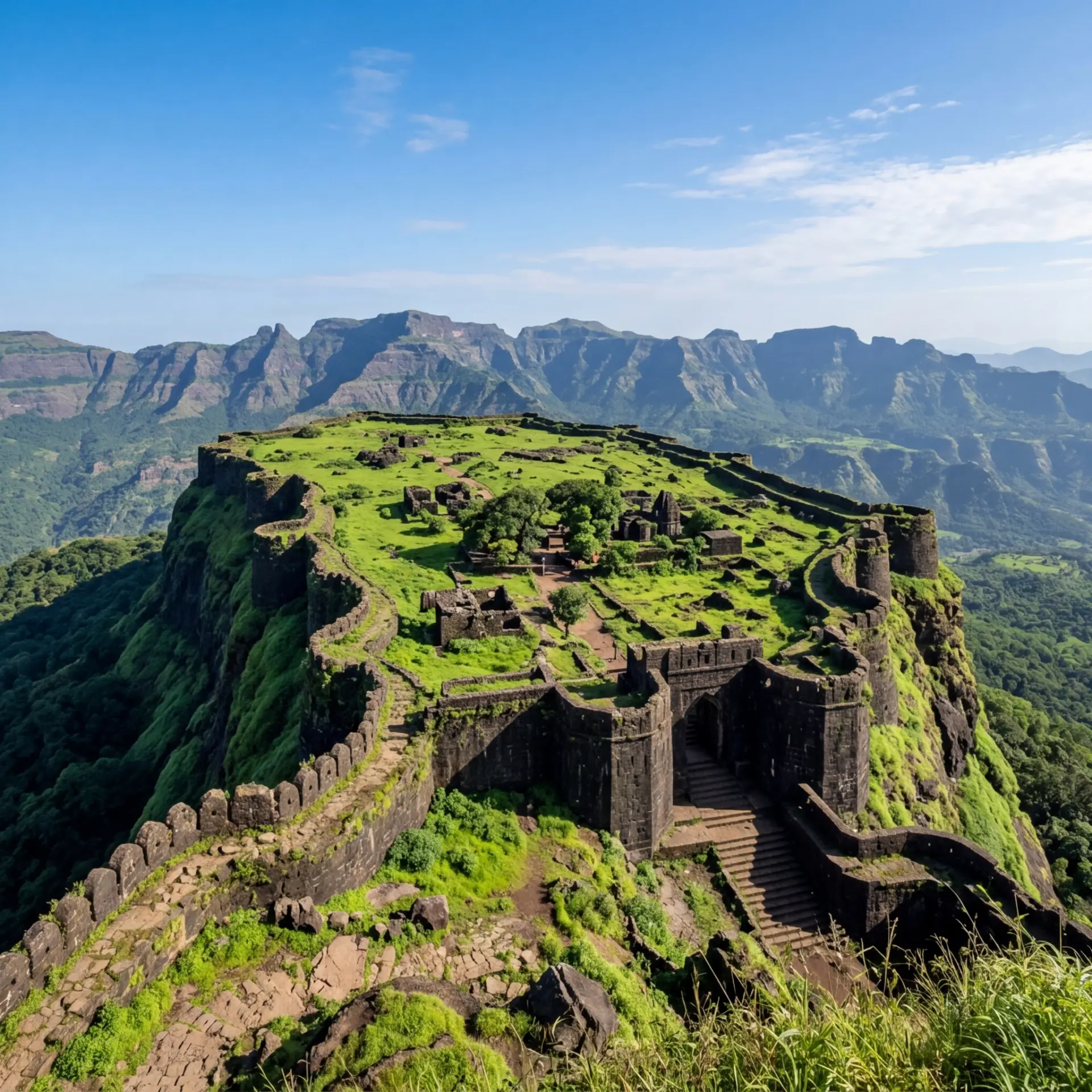
The robust fortifications that withstood numerous attacks, showcasing Maratha engineering.
Daud Pir Tomb
A revered shrine on the island, reflecting local beliefs and history.
Musical Stone
A curious natural phenomenon, a stone that produces musical sounds when struck.
Coastal Flavors of Alibaug
Must-Try Dishes
Bombil Fry (Bombay Duck Fry)
NON-VEGCrispy fried local fish, a coastal delicacy.
₹200-400
Surmai Thali (Kingfish Thali)
NON-VEGA complete meal with fish curry, fried fish, bhakri/rice, and sol kadhi.
₹300-600
Prawns Curry
NON-VEGSpicy and flavorful prawn preparation, a local favorite.
₹250-500
Ukadiche Modak
VEGSweet steamed dumplings, especially popular during festivals.
₹20-50/piece
Best Restaurants
- Sanman Restaurant (Alibaug)Alibaug · Seafood · ₹500-1000/personSpeciality: Authentic Malvani seafood
- Patil Khanaval (Thal)Thal Village · Local Maharashtrian · ₹150-300/personSpeciality: Homemade meals, fresh fish
Nearby Activities & Experiences
Khanderi Fort Visit
Khanderi Island
Explore the historic sea fort and its landmarks.
Boat charges apply
Lighthouse Tour
Khanderi Island
Visit the operational lighthouse for panoramic views (permission may be required).
Nominal fee/permission
Boat Ride
From Thal Village
Enjoy a scenic boat journey to the island, often combined with Underi Fort.
Varies by boat type
Photography
Throughout the island and during boat ride
Capture the fort, lighthouse, and coastal scenery.
Free
Where to Stay
Homestays/Guesthouses (Thal/Alibaug)
Thal/Alibaug · ₹1000-3000/night
Basic to comfortable accommodation, close to beaches.
Resorts in Alibaug
Alibaug · ₹3000-10000+/night
Luxury options with amenities, beach access.
Safety Alerts
- Sea conditions can be unpredictable; always follow safety instructions during boat travel.Season: all
- The fort area can be slippery, especially during high tide or after rain. Wear appropriate footwear.Season: all
- Khanderi is a restricted area under Indian Navy jurisdiction; respect all signs and regulations.Season: all
Police: Nearest police station in Alibaug.
Medical: Primary Health Centers in Alibaug; larger hospitals in Alibaug or Navi Mumbai.
Coastal Emergency: Indian Coast Guard (Mumbai region)
What Visitors Say
"Khanderi is a must-visit for anyone interested in Maratha naval history. The boat ride is an adventure, and the lighthouse offers incredible views. A truly unique fort experience!"
Top Positives
- ✓Rich naval history
- ✓Iconic lighthouse
- ✓Unique island experience
- ✓Panoramic sea views
Pro Tips
- →Plan your visit during low tide for easier access to the fort.
- →Carry a good camera for stunning coastal photography.
- →Combine your trip with a visit to nearby Underi Fort or Alibaug beaches.
- →Negotiate boat fares in advance.
4.6
(Many reviews)
Frequently Asked Questions
What is the history of Khanderi Fort?
Khanderi Fort stands in Raigad district, Maharashtra, and dates to 1679 CE. Khanderi Fort, officially known as Kanhoji Angre Island, is a historic sea fort located off the coast of Thal near Alibaug. Built by Chhatrapati Shivaji Maharaj in 1679, it served as a crucial naval base for the Maratha Empire, particularly under the legendary Admiral Kanhoji Angre. The fort is renowned for its strategic importance in controlling the Arabian Sea, its British-era lighthouse, and its rich history of naval battles. It offers a unique island experience, accessible by boat, making it a significant destination for history and sea enthusiasts.
How to reach Khanderi Fort?
Khanderi Fort: Accessible by boat from Thal village near Alibaug. Thal is well-connected by road from Mumbai and Pune. It lies in Raigad district, Maharashtra (Off Thal Village, Alibaug, Raigad District, Maharashtra).
What is the trek distance and difficulty of Khanderi Fort?
Khanderi Fort needs no real trek — it is reached by road or boat, and about 2 hours are enough to explore it. Difficulty: Easy.
What is the best time to visit Khanderi Fort?
The best time to visit Khanderi Fort is october to February for calm seas and pleasant weather.
What is the entry fee for Khanderi Fort?
Entry to Khanderi Fort: Boat charges apply; fort entry is free..
संग्रह · Collections
This Fort Appears In
जवळचे किल्ले · Explore More
Nearby Forts to Explore
Discover other Maharashtra forts close by — plan a multi-fort trek or weekend heritage trail.
संदर्भ · References
References & Further Reading
Authoritative sources for Khanderi Fort — verify history, location and photos on Wikipedia, Google Maps, Wikimedia Commons and official government portals.
- ↗WikipediaKhanderi Fort on Wikipedia
- ↗Google MapsKhanderi Fort on Google Maps
- ↗Wikimedia CommonsKhanderi Fort photos on Wikimedia Commons
- ↗Maharashtra Tourism (Govt.)Maharashtra Tourism — Forts
- ↗ASIArchaeological Survey of India
External links open in a new tab. Durgved is not affiliated with the linked sources.