
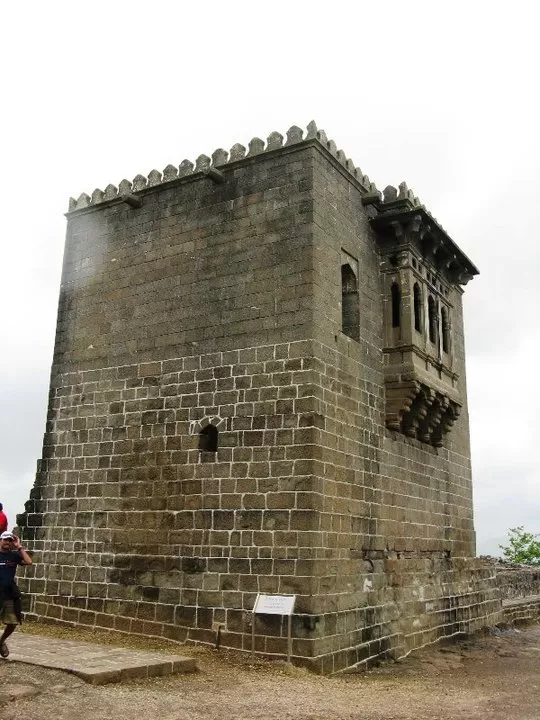
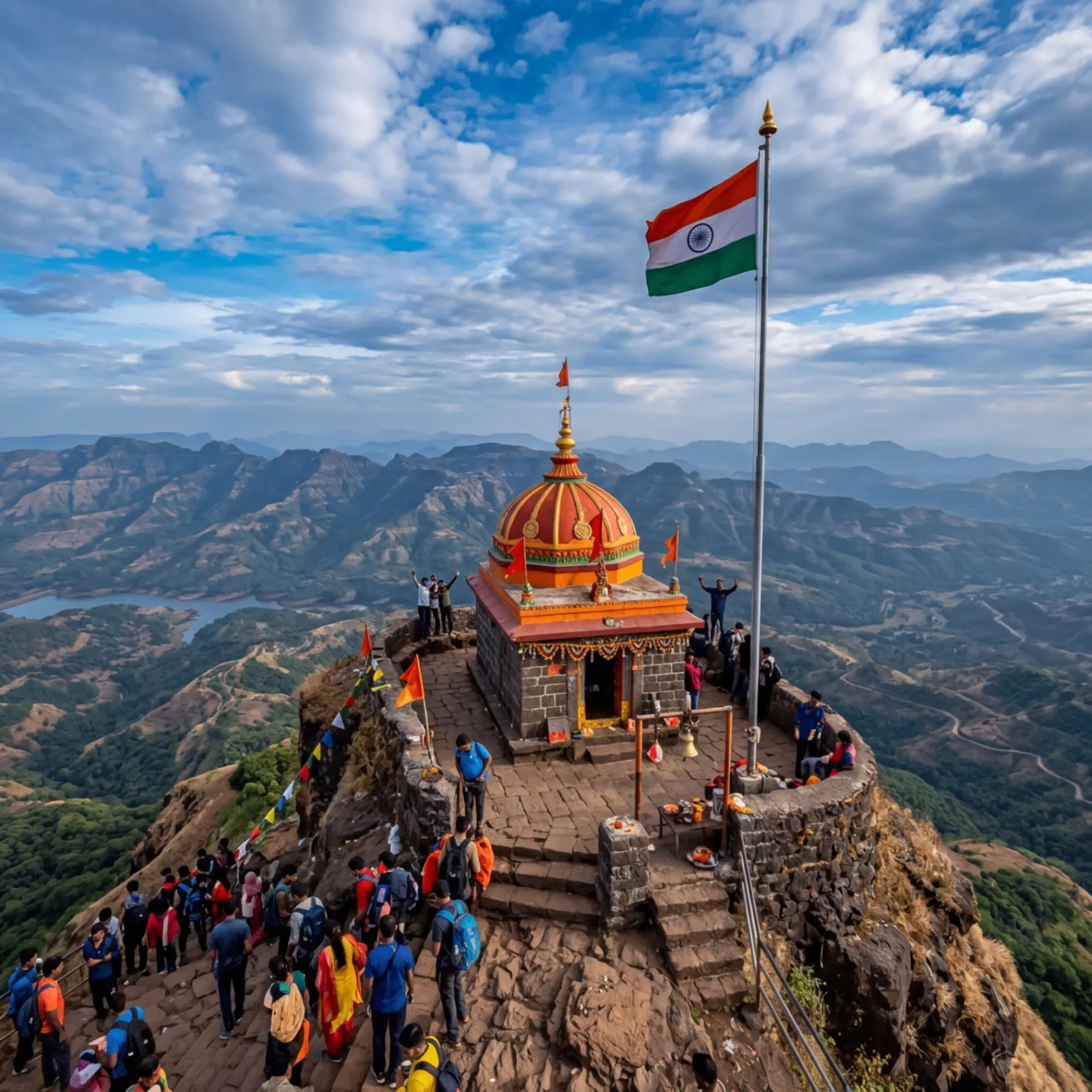
Shivneri rises 1,170 metres above the town of Junnar in northern Pune district, a triangular hill fort whose name is forever linked to the birth of Chhatrapati Shivaji Maharaj on 19 February 1630. Built atop a much older Buddhist cave complex carved between the 1st century BCE and the 3rd century CE, the fort guarded the ancient Naneghat trade route that connected Kalyan port to the Deccan plateau. The Yadavas, Bahmani Sultans, Nizam Shahis of Ahmednagar and finally the Mughals each held the citadel before it returned to Maratha hands. Jijabai chose Shivneri for her son's birth because of its near-impregnable defences — seven successive gates, sheer scarp walls and the protected Badami Talav cistern within. Today the fort preserves the Shivai Devi temple from which Shivaji took his name, the Shivkunj pavilion marking the birthplace, the perennial Ganga-Jamuna water tanks, and panoramic views across the Junnar plain to Naneghat and Lenyadri. The trek from Junnar town is gentle by Sahyadri standards, climbing stone steps through all seven gates in roughly two hours. Monsoon drapes the basalt in moss and pours waterfalls over the western cliffs, while winter mornings reveal the entire Kukadi valley in crisp detail.
SHIVNERI FORT
Rising 1,170 metres above Junnar, this seven-gated hill fort is where Jijabai gave birth to Shivaji Maharaj — the citadel that began the dream of Swarajya.
Chronicles of the Fort
Wander through history, ramparts, kitchens, and trails — pick a chapter below.
The Cradle of Swarajya
Shivneri's story begins long before the Marathas. Buddhist monks first carved its lower caves in the 1st century BCE as a wayside monastery for traders moving up the Naneghat pass. The Yadavas of Devagiri raised the first true fortifications around 1170 to guard that trade route.
The fort passed through Bahmani, Nizam Shahi and Mughal hands before Maloji Bhosale — Shivaji's grandfather — was granted it by the Nizam Shahi court. Decades later, his daughter-in-law Jijabai chose Shivneri's near-impregnable seven gates as the safest place to give birth to her son.
Within Shivneri's protected Shivkunj pavilion, Jijabai gave birth to a boy she named Shivaji — after the local goddess Shivai whom she had vowed to honour. That child would, within forty years, found the Maratha Swarajya and crown himself Chhatrapati at Raigad.
- 1st c. BCEBuddhist caves carved
Monks establish a wayside monastery on the lower slope.
- c. 1170Fortified by Yadavas
Stone ramparts and the first gates rise atop the hill.
- 1595Granted to the Bhosales
Maloji Bhosale receives Shivneri from the Nizam Shahi court.
- 1630Birth of Shivaji Maharaj
Jijabai gives birth to Shivaji within the Shivkunj on 19 February.
- 1673Failed reconquest
Shivaji's attempt to retake his birthplace from the Mughals is repulsed.
- 1716Reclaimed by Marathas
Finally taken by Shahu Maharaj's forces.
"Shivneri is the womb of the Maratha empire — every stone of its seven gates remembers the cry of a newborn king."जिथे शिवरायांचा जन्म झाला
Key Landmarks
Pavilion marking the birthplace of Shivaji Maharaj with bronze of Jijabai and infant Shivaji.
Rock-cut shrine of the goddess after whom Shivaji was named.
Octagonal stepped reservoir at the heart of the fort.
Twin perennial water cisterns that never run dry.
The grand primary gate; first of seven successive defensive arches.
50+ rock-cut viharas and a chaitya from the 1st century BCE.
Junnar Cuisine
Spicy sprouted-moth curry with extra tarri, served with pav and raw onion.
Gram-flour curry with jowar roti and garlic thecha at the base eateries.
Locally made milk sweet — buy a box from Junnar town as you descend.
- Hotel VighnahartaJunnar town · Veg · ₹150-300/personSpeciality: Misal pav, thali
- Shivneri BhojanalayBase parking · Veg · ₹200-350/personSpeciality: Pithla bhakri, zunka
- Junnar Mavla Pedha HouseJunnar bazaar · Sweets · ₹400/kgSpeciality: Pedha, basundi
Nearby Activities & Experiences
Ashtavinayak shrine carved into a Buddhist cave complex on the opposite hill.
Ancient pass with 2,000-year-old Brahmi inscriptions and panoramic Konkan views.
Sister fort with rock-cut steps and Chamunda temple at the summit.
Giant Metrewave Radio Telescope visitor centre — open select weekends.
- Stepped trail gets very slippery in monsoon — use a poleSeason: June-September
- No water or food vendors on the fort — carry your ownSeason: All year
- Unfenced western scarp — keep children supervisedSeason: All year
- Heavy crowds and traffic around Junnar on 19 February (Shiv Jayanti)Season: February
What Visitors Say
"Walking through Shivneri's seven gates is a pilgrimage — every Maharashtrian should climb to the Shivkunj at least once and stand where Shivaji Maharaj first opened his eyes."
- ✓Birthplace of Chhatrapati Shivaji Maharaj
- ✓Well-preserved seven-gate defensive system
- ✓Easy gradient suitable for families
- ✓ASI-protected and well maintained
- ✓Combine easily with Lenyadri and Naneghat
- →Visit on 19 February for Shiv Jayanti celebrations
- →Carry water — none available on the fort
- →Start before 9 AM in summer
- →Buy Junnar pedha as you descend
- →Hire an ASI-licensed guide for full history
Frequently Asked Questions
What is the history of Shivneri Fort?
Shivneri Fort stands in Pune district, Maharashtra, and dates to c. 1170 AD. Shivneri rises 1,170 metres above the town of Junnar in northern Pune district, a triangular hill fort whose name is forever linked to the birth of Chhatrapati Shivaji Maharaj on 19 February 1630. Built atop a much older Buddhist cave complex carved between the 1st century BCE and the 3rd century CE, the fort guarded the ancient Naneghat trade route that connected Kalyan port to the Deccan plateau. The Yadavas, Bahmani Sultans, Nizam Shahis of Ahmednagar and finally the Mughals each held the citadel before it returned to Maratha hands. Jijabai chose Shivneri for her son's birth because of its near-impregnable defences — seven successive gates, sheer scarp walls and the protected Badami Talav cistern within. Today the fort preserves the Shivai Devi temple from which Shivaji took his name, the Shivkunj pavilion marking the birthplace, the perennial Ganga-Jamuna water tanks, and panoramic views across the Junnar plain to Naneghat and Lenyadri. The trek from Junnar town is gentle by Sahyadri standards, climbing stone steps through all seven gates in roughly two hours. Monsoon drapes the basalt in moss and pours waterfalls over the western cliffs, while winter mornings reveal the entire Kukadi valley in crisp detail.
How to reach Shivneri Fort?
Shivneri Fort: 2 km stepped trek through seven gates from Junnar town. It lies in Pune district, Maharashtra (Shivneri Fort, Junnar, Pune district, Maharashtra, India).
What is the trek distance and difficulty of Shivneri Fort?
Shivneri Fort is a easy trek of about 2 km, taking roughly 2 hours, rising to 1170 m.
What is the best time to visit Shivneri Fort?
The best time to visit Shivneri Fort is november to March for clear visibility and pleasant climb.
What is the entry fee for Shivneri Fort?
Entry to Shivneri Fort: ₹25 Indian / ₹300 Foreign. Parking ₹30-70..
This Fort Appears In
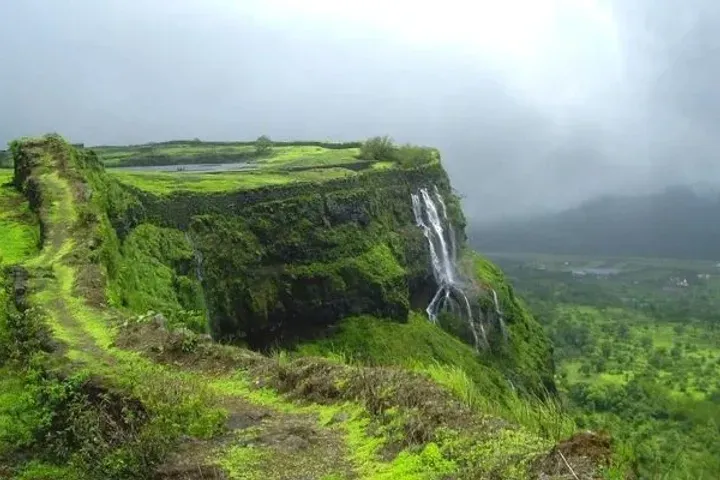
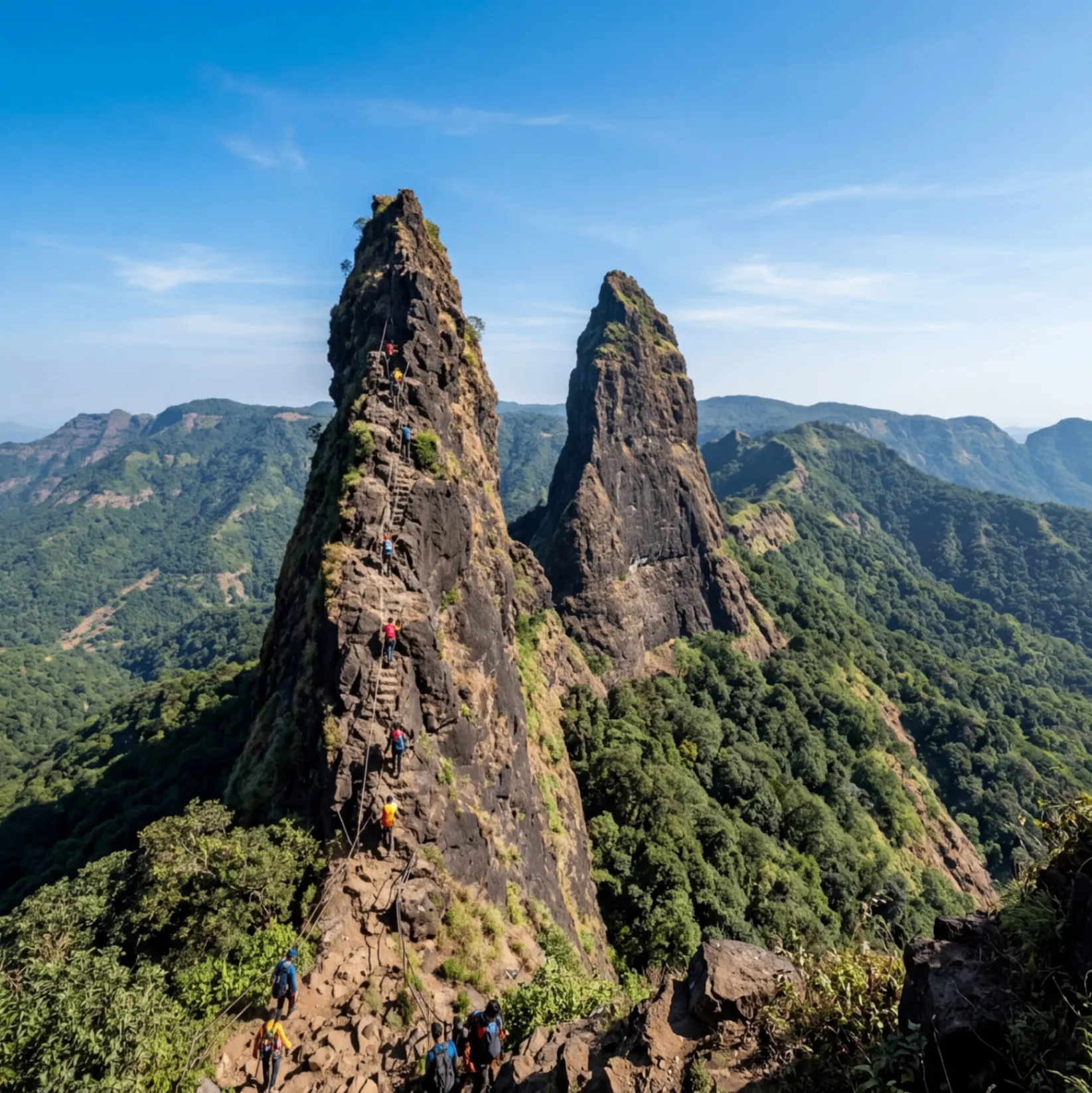
Nearby Forts to Explore
Discover other Maharashtra forts close by — plan a multi-fort trek or weekend heritage trail.
References & Further Reading
Authoritative sources for Shivneri Fort — verify history, location and photos on Wikipedia, Google Maps, Wikimedia Commons and official government portals.
- ↗WikipediaShivneri Fort on Wikipedia
- ↗Google MapsShivneri Fort on Google Maps
- ↗Wikimedia CommonsShivneri Fort photos on Wikimedia Commons
- ↗Maharashtra Tourism (Govt.)Maharashtra Tourism — Forts
- ↗ASIArchaeological Survey of India
External links open in a new tab. Durgved is not affiliated with the linked sources.