
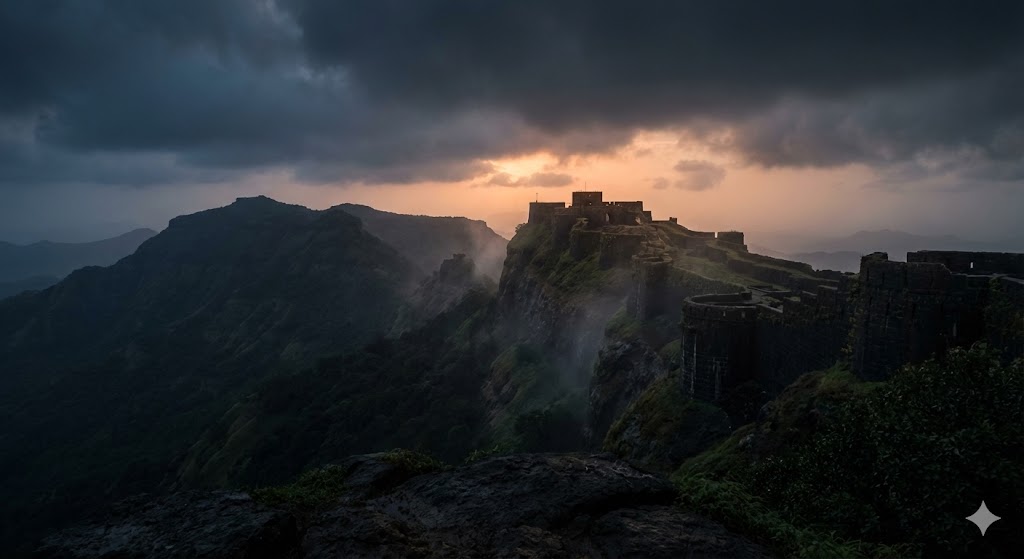
Daulatabad Fort, originally known as Devagiri (Hill of Gods), is a historic fortified citadel near Aurangabad. It served as the capital of the Yadava dynasty, briefly the capital of the Delhi Sultanate, and later a secondary capital of the Ahmadnagar Sultanate. Known for its ingenious defense mechanisms, including a unique single entrance/exit, a dark labyrinth, and a deep moat, the fort stands on a conical hill 200 meters high.
BUILT 1187 AD · CAPITAL OF YADAVAS · SHIFTED CAPITAL 1327 AD
DAULATABAD FORT
DAULATABAD — THE FORT OF PROSPERITY
Daulatabad Fort, originally Devagiri, is a masterpiece of medieval defense, known for its unique architecture and strategic importance. It has witnessed the rise and fall of several dynasties, leaving behind a rich legacy.
देवगिरी — दौलताबाद
मार्ग निवडा · Choose Your Path
Chronicles of the Fort
Wander through history, ramparts, kitchens, and trails — pick a chapter below.
Tap a chapter to switchTap to switch
From Devagiri to Daulatabad: A Saga of Dynasties
Founded by the Yadava dynasty in 1187, Devagiri became a prominent center. Its strategic location attracted the attention of the Delhi Sultanate, leading to its annexation by Alauddin Khalji in 1308.
A pivotal moment occurred in 1327 when Muhammad bin Tughluq controversially shifted his capital from Delhi to Daulatabad, forcing a mass migration. This experiment, however, failed due to water scarcity, and the capital returned to Delhi.
The fort later became a secondary capital for the Ahmadnagar Sultanate and was eventually captured by the Mughals and then the Marathas, each leaving their architectural and historical imprint.
The 'Mad King's' Capital
Muhammad bin Tughluq's decision to shift his capital to Daulatabad, though ultimately unsuccessful, highlights the fort's perceived strategic importance.
- 1187Yadava Foundation
Bhillama V establishes Devagiri as the Yadava capital.
- 1308Khalji Conquest
Alauddin Khalji annexes Devagiri into the Delhi Sultanate.
- 1327Tughluq's Capital Shift
Muhammad bin Tughluq renames Devagiri to Daulatabad and makes it his capital.
- 1446Chand Minar Construction
Alauddin Bahmani builds the iconic Chand Minar.
"Daulatabad Fort isn't just a fort... it's a masterpiece of power and history."A Masterpiece of Medieval Defense
Key Landmarks
Must See
Chand Minar
The prominent 64-meter tower, a symbol of the fort's grandeur.
Chini Mahal
The palace known for its blue and white tiles, a testament to its past.
Jami Masjid
An ancient mosque within the fort, showcasing historical architecture.
Bharat Mata Temple
A unique structure that has served as both a temple and a mosque.
Elephant Tank
A large water tank, part of the fort's water management system.
Baradari
A twelve-arched pavilion offering views and a resting place.
Local Flavors of Daulatabad
Must-Try Dishes
Naan Qalia
NON-VEGA rich and spicy mutton curry served with naan, a local specialty.
₹200-400
Aurangabadi Biryani
VEG/NON-VEGA fragrant rice dish cooked with meat or vegetables and aromatic spices.
₹150-350
Sheer Khurma
VEGA sweet vermicelli pudding, especially popular during festivals.
₹80-150
Best Restaurants
- Local Eateries near FortDaulatabad Village · Veg/Non-veg · ₹100-300/personSpeciality: Local Maharashtrian and Mughlai cuisine
- Restaurants in Aurangabad16 km from fort · Wide range · ₹200-800/personSpeciality: Multi-cuisine options
Nearby Activities & Experiences
Explore the Fort's Defenses
Throughout the fort
Navigate the labyrinth, moats, and various defensive layers.
Included in entry
Climb to Chand Minar
Kataka section
Admire the architecture and historical significance of the tower.
Included in entry
Visit Jami Masjid and Chini Mahal
Within the fort
Discover the religious and palatial structures.
Included in entry
Photography
Throughout the fort
Capture the unique architecture and panoramic views.
Free
Where to Stay
Hotels in Aurangabad
16 km from fort · ₹1500-6000/night
Wide range of options from budget to luxury
Guesthouses/Homestays near Daulatabad
Daulatabad Village · ₹800-2000/night
Basic amenities, local experience
Safety Alerts
- The fort involves a lot of walking and climbing steps; wear comfortable footwear.Season: all
- The labyrinth section can be very dark; carrying a flashlight is advisable.Season: all
- Summers can be extremely hot; stay hydrated and visit during cooler parts of the day.Season: summer
Police: Local Police (Daulatabad/Aurangabad)
Medical: Nearest medical facilities in Aurangabad
What Visitors Say
"Daulatabad Fort is an architectural marvel with an incredible history. The defensive features are truly ingenious."
Top Positives
- ✓Ingenious defense mechanisms
- ✓Rich historical background
- ✓Impressive architecture
- ✓Panoramic views
Pro Tips
- →Hire a local guide to understand the fort's complexities
- →Visit early morning to avoid crowds and heat
- →Wear comfortable shoes and carry water
4
(Many reviews)
Frequently Asked Questions
What is the history of Daulatabad Fort?
Daulatabad Fort stands in Aurangabad district, Maharashtra, and dates to 1187 AD. Daulatabad Fort, originally known as Devagiri (Hill of Gods), is a historic fortified citadel near Aurangabad. It served as the capital of the Yadava dynasty, briefly the capital of the Delhi Sultanate, and later a secondary capital of the Ahmadnagar Sultanate. Known for its ingenious defense mechanisms, including a unique single entrance/exit, a dark labyrinth, and a deep moat, the fort stands on a conical hill 200 meters high.
How to reach Daulatabad Fort?
Daulatabad Fort: Accessible by road from Aurangabad, followed by climbing steps within the fort. It lies in Aurangabad district, Maharashtra (Daulatabad Village, Aurangabad District, Maharashtra).
What is the trek distance and difficulty of Daulatabad Fort?
Daulatabad Fort needs no real trek — it is reached by road or boat, and about 3 hours are enough to explore it, at an altitude of 200 m. Difficulty: Moderate.
What is the best time to visit Daulatabad Fort?
The best time to visit Daulatabad Fort is october to March for pleasant weather.
What is the entry fee for Daulatabad Fort?
Entry to Daulatabad Fort: Indians: ₹25, Foreigners: ₹300.
संग्रह · Collections
This Fort Appears In
जवळचे किल्ले · Explore More
Nearby Forts to Explore
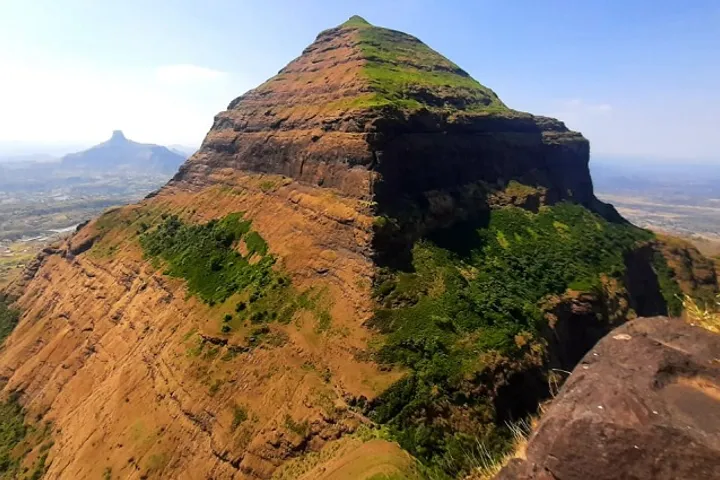
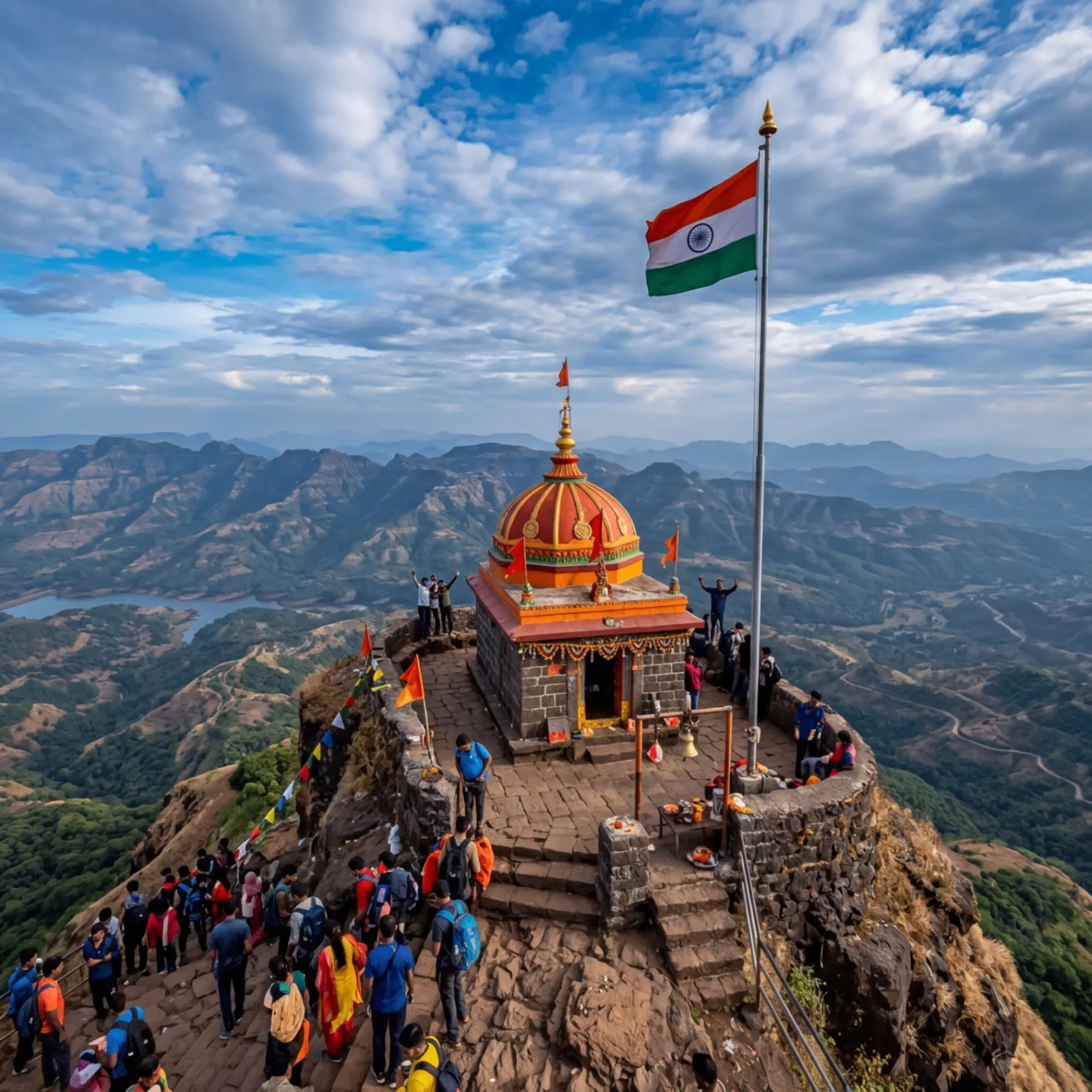
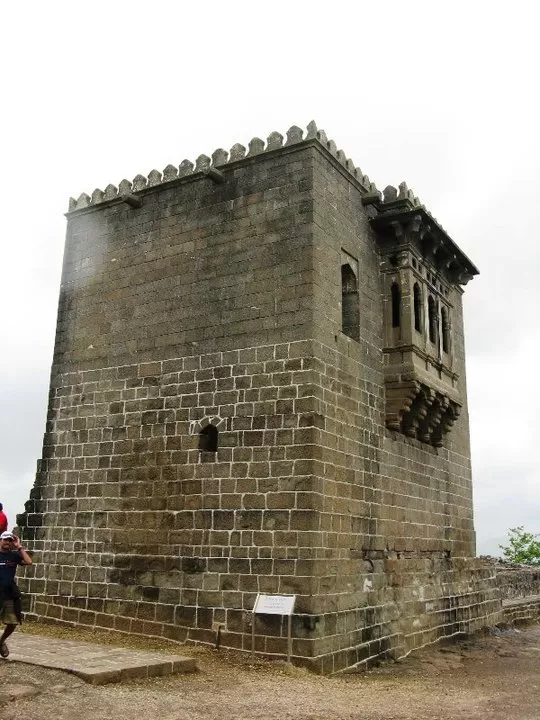
Discover other Maharashtra forts close by — plan a multi-fort trek or weekend heritage trail.

संदर्भ · References
References & Further Reading
Authoritative sources for Daulatabad Fort — verify history, location and photos on Wikipedia, Google Maps, Wikimedia Commons and official government portals.
- ↗WikipediaDaulatabad Fort on Wikipedia
- ↗Google MapsDaulatabad Fort on Google Maps
- ↗Wikimedia CommonsDaulatabad Fort photos on Wikimedia Commons
- ↗Maharashtra Tourism (Govt.)Maharashtra Tourism — Forts
- ↗ASIArchaeological Survey of India
External links open in a new tab. Durgved is not affiliated with the linked sources.